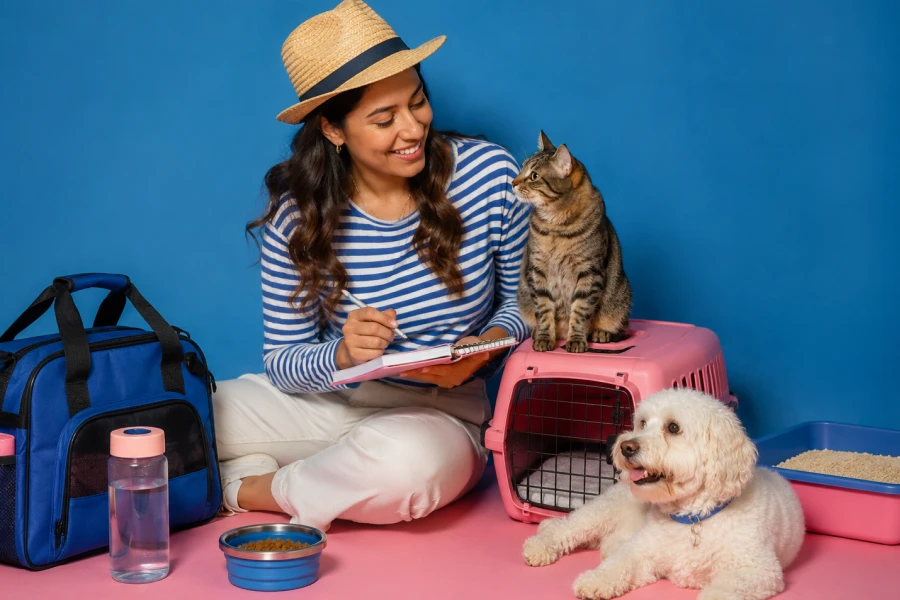
Dog and cat travel planning helps owners manage two very different comfort styles with one organized system. Dogs often show stress through movement, barking, panting, or restlessness. Cats may hide, freeze, meow, or resist the carrier. Both reactions deserve preparation, not frustration. A thoughtful plan respects temperament. It also protects safety, timing, and supplies. Travel becomes easier when owners stop improvising. Each detail supports the next one. Pets feel more secure when humans act calmly. The whole experience becomes more manageable.
Dogs and cats process travel differently. Dogs may need exercise before departure. Cats may need quiet and reduced handling. Dogs often want reassurance. Cats often want privacy. Build your plan around those differences. Use cat travel tips for carrier setup and hiding prevention. Use dog-focused routines for leash safety and breaks. One household can still use one master plan. The details simply change by pet.
Secure containment protects everyone. Pets should not roam freely during travel. Sudden stops can cause injuries. Open doors can create escape risks. Choose a carrier or crate that fits properly. Add soft bedding that does not slide. Keep ventilation clear. Attach identification to carriers when possible. Test the setup before the travel day. A safe zone should feel familiar, not newly invented. This helps pets settle faster.
Health preparation should happen early. Review vaccines, medications, microchip details, and emergency contacts. Some destinations require records. Airlines and accommodations may request specific documents. Keep digital and printed copies. Pack medications in original containers when possible. Bring dosage instructions. Include your veterinarian’s phone number. A solid pet documents for travel routine prevents avoidable stress. Owners make better decisions when information is ready.
Breaks should support comfort, not chaos. Dogs may need leashed movement and bathroom stops. Cats usually need quiet containment instead. Avoid opening carriers in unsafe outdoor spaces. Keep water available during longer routes. Watch temperature carefully. Do not leave pets unattended in vehicles. Bring waste bags, wipes, and absorbent pads. Keep stops short when your pet is overwhelmed. The right break restores balance. The wrong break creates risk.
Overnight travel needs destination preparation. Confirm pet rules before booking. Ask about fees, limits, and restricted areas. Choose rooms with easy outdoor access for dogs when possible. For cats, create a quiet starter space. Check under beds and behind furniture. Remove unsafe items from the floor. Set up familiar bedding first. A reliable pet carrier setup can also become a resting zone. Familiar spaces reduce post-arrival stress.
Pets communicate discomfort early. Dogs may lick lips, yawn, shake, whine, or pace. Cats may crouch, flatten ears, freeze, or vocalize. These signs are information. Respond with quiet, space, water, or a pause. Avoid scolding fear-based behavior. It usually makes travel harder. Lower stimulation when possible. Keep your own movements slow. Pets recover faster when they feel protected. Awareness turns travel into teamwork.
A repeatable system saves time. Keep one packing list for both pets. Mark dog-specific and cat-specific items clearly. Store travel supplies together. Update the list after every trip. Keep carriers clean and accessible. Practice short calm sessions between journeys. Reward progress without forcing perfection. Dog and cat travel planning improves through use. Each trip reveals what your pets need. The system becomes more personal, practical, and calm.



Leave a comment